
Government vs Private Medical Colleges: Which Should You Choose?
Clearing NEET is a huge milestone, but for many students, the real confusion begins after the result. If you are the first person in your family entering the medical field, choosing between a government and a private medical college can feel overwhelming. Fees, counselling rounds, college names, patient exposure, future career prospects everything suddenly matters, and wrong advice can cost years and money.
This guide is meant to help you understand the difference between government and private medical colleges in India, so you can make a confident and informed decision during NEET counselling.
Government Medical Colleges in India
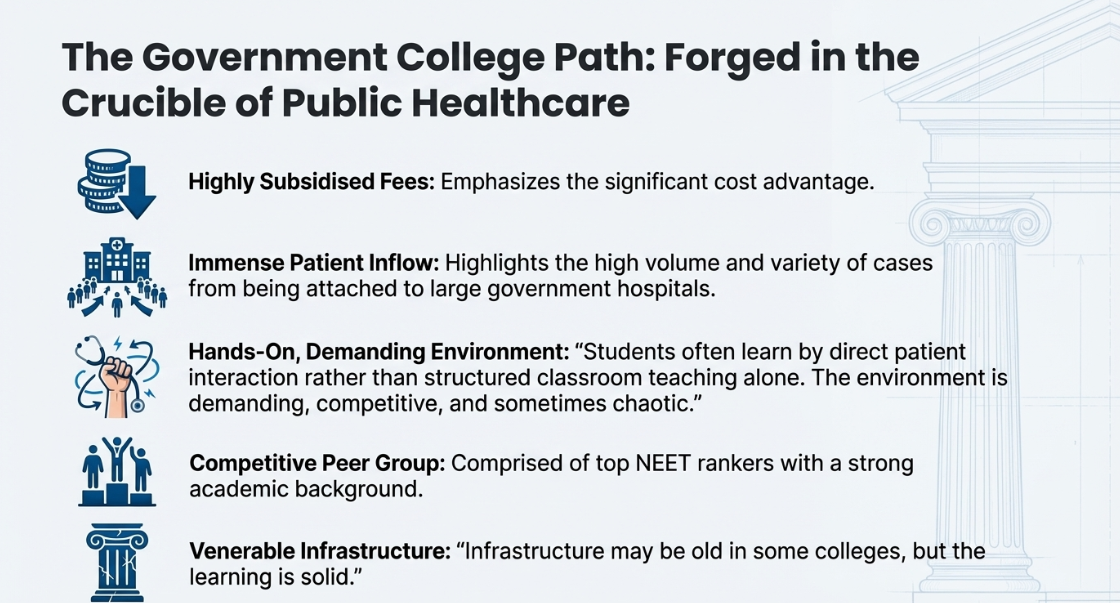
Government medical colleges are institutions run by the central or state governments and form the backbone of India’s public healthcare system. These colleges admit students strictly through merit-based NEET Counselling and are known for their low fees and high patient load. Because they are attached to large government hospitals, students are exposed to a wide range of diseases and real-world medical scenarios from an early stage.
Key Characteristics of Government Medical Colleges
Students in government colleges often learn by direct patient interaction rather than structured classroom teaching alone. The environment is demanding, competitive, and sometimes chaotic, but it prepares students strongly for clinical practice and postgraduate entrance exams.
- Highly subsidised fees
- Very high patient inflow and hands-on exposure
- Competitive peer group with strong academic background
- Infrastructure may be old in some colleges, but learning is solid
Top Government Medical Colleges in India
Government medical colleges in India have built their reputation over decades through consistent academic performance, strong clinical training, and distinguished alumni. Admission to these colleges is highly competitive due to limited seats and low fees, and they are often the first preference for top NEET rankers. The following list includes some of the most well-known and trusted government medical colleges in India, recognised for their academic standards and clinical exposure.
| Rank | College Name | Location |
| 1 | AIIMS | New Delhi |
| 2 | Maulana Azad Medical College | New Delhi |
| 3 | Lady Hardinge Medical College | New Delhi |
| 4 | Grant Medical College | Mumbai |
| 5 | Madras Medical College | Chennai |
| 6 | King George’s Medical University | Lucknow |
| 7 | Bangalore Medical College | Bengaluru |
| 8 | Osmania Medical College | Hyderabad |
| 9 | Gandhi Medical College | Hyderabad |
| 10 | Kakatiya Medical College | Warangal |
Pros of Joining a Government Medical College
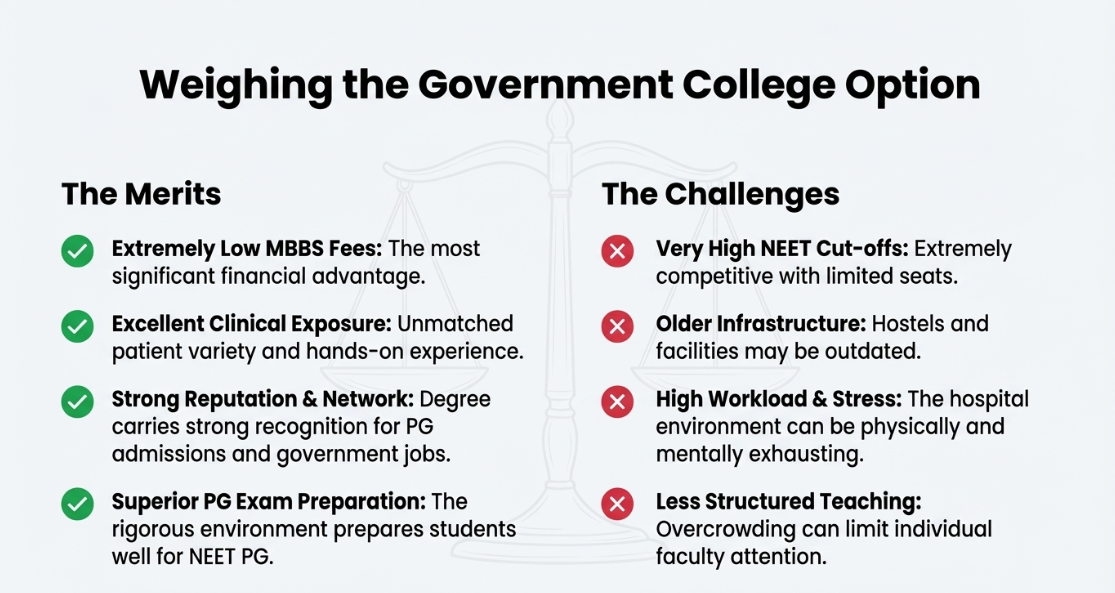
Government medical colleges are preferred by most top NEET rankers because they offer strong clinical training at a very low cost. Graduates from these colleges usually develop confidence in handling patients due to continuous exposure in busy hospitals. The degree also carries strong recognition across India, especially for postgraduate admissions and government jobs. The benefits of joining a government medical college are:
- Extremely low MBBS fees
- Excellent clinical exposure and patient variety
- Strong reputation and alumni network
- Better preparation for NEET PG and competitive exams
Before moving ahead it is important to clearly understand the Types of NEET Counselling
Cons of Joining a Government Medical College
Despite their strengths, government colleges are not without challenges. The heavy workload can be physically and mentally exhausting, especially during internship. Infrastructure and hostels may be outdated, and individual attention from faculty is often limited due to overcrowding.
- Very high NEET cut-offs and limited seats
- Older infrastructure in many institutions
- High workload and stressful hospital environment
- Less structured teaching in some departments
Private Medical Colleges in India
Private medical colleges are run by private trusts or deemed universities and also follow the NMC-prescribed MBBS curriculum. While the degree awarded is the same, the experience can be very different from government colleges. These institutions are usually chosen by students who could not secure a government seat or who prioritise better infrastructure and campus facilities.
Check: MBBS Bond in India 2025: State-Wise Rules, Duration & Penalties
Key Characteristics of Private Medical Colleges
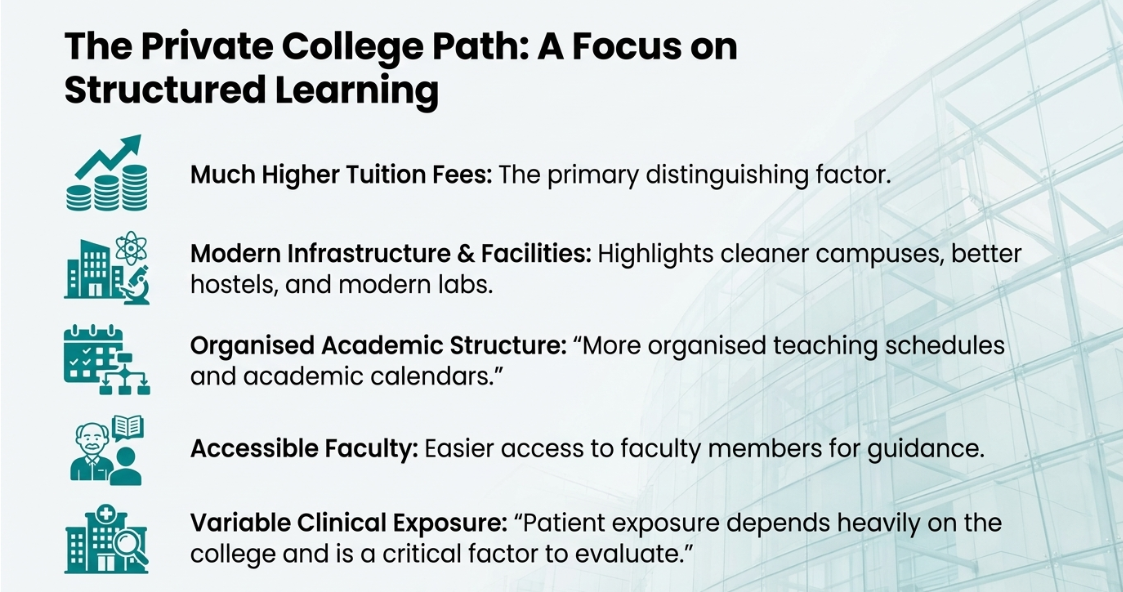
Private colleges generally offer cleaner campuses, better hostels, modern labs, and more organised teaching schedules. However, the biggest concern remains the high cost of education and the variability in clinical exposure from one college to another.
- Much higher tuition fees
- Better infrastructure and facilities
- More organised academic structure
- Patient exposure depends heavily on the college
Top Private Medical Colleges in India
Private medical colleges in India vary greatly in quality, but a few institutions have built a strong reputation through good academics, reliable clinical training, and experienced faculty. These colleges are often preferred by students who can afford private education and want recognised institutions. The following table lists some of the most well-known private medical colleges in India.
| Rank | College Name | Location |
| 1 | Christian Medical College (CMC) | Vellore |
| 2 | St John’s Medical College | Bengaluru |
| 3 | Kasturba Medical College | Manipal |
| 4 | Kasturba Medical College | Mangalore |
| 5 | Jamia Hamdard | New Delhi |
| 6 | Dayanand Medical College | Ludhiana |
| 7 | JSS Medical College | Mysuru |
| 8 | PSG Institute of Medical Sciences | Coimbatore |
| 9 | Sri Ramachandra Medical College | Chennai |
| 10 | DY Patil Medical College | Pune |
Also Read: Common Mistakes to Avoid during NEET Counselling
Pros of Joining a Private Medical College
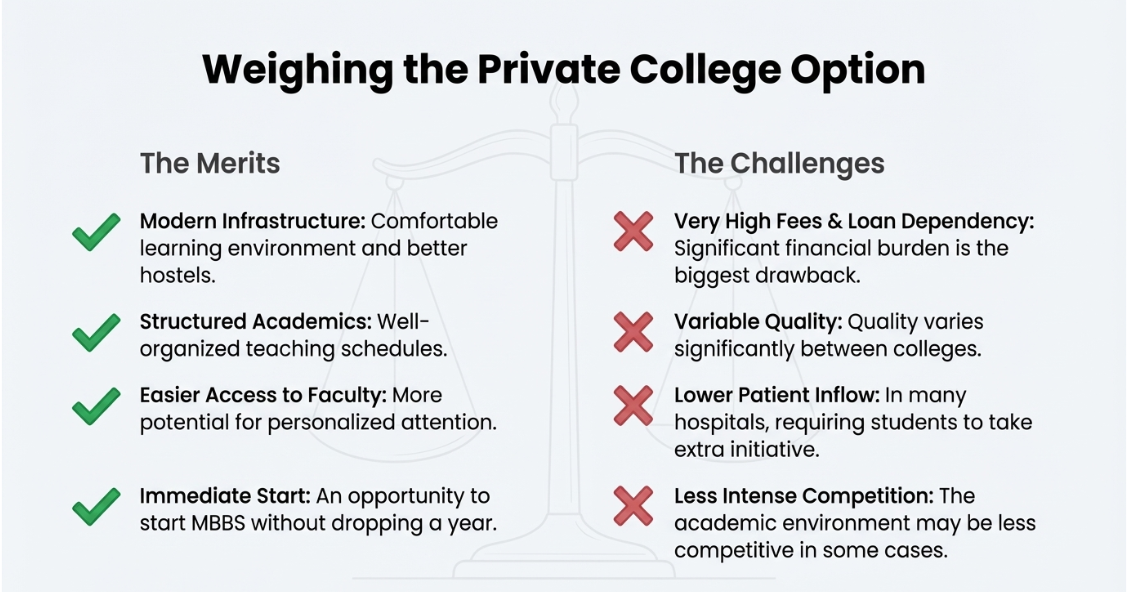
A good private medical college can provide a comfortable learning environment with modern facilities and structured teaching. Faculty members are often more accessible, and academic schedules tend to be better organised. For students who can afford the fees, private colleges offer a smoother campus experience.
- Modern infrastructure and better hostels
- Structured academics and teaching schedules
- Easier access to faculty
- Opportunity to start MBBS without dropping a year
Cons of Joining a Private Medical College
The biggest drawback of private medical colleges is the financial burden. High fees often mean long-term education loans, which can influence career decisions after MBBS. In many private colleges, patient load is lower, which means students must take extra initiative to gain clinical confidence.
- Very high fees and loan dependency
- Quality varies significantly between colleges
- Lower patient inflow in many hospitals
- Less intense academic competition in some cases
Also Read: Types of NEET Counselling: MCC vs State Seats and Eligibility
Government vs Private Medical Colleges: Which one should you choose?
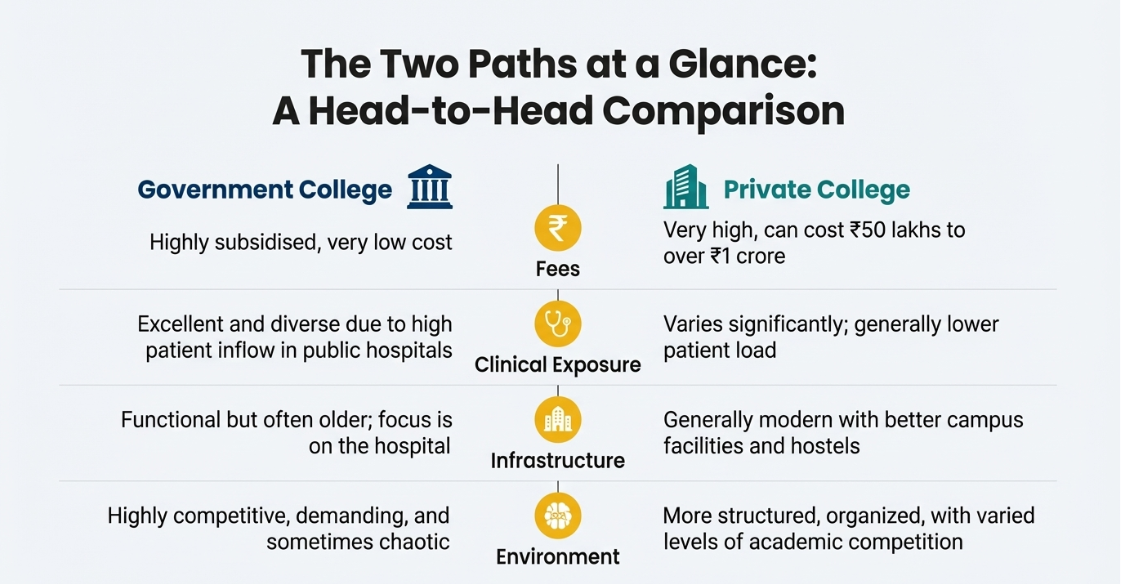
There is no universal “right” answer to this question. The best choice depends on your NEET rank, financial situation, learning style, and long-term goals. A government college offers unmatched clinical exposure at a low cost, while a good private college offers better infrastructure and a more comfortable academic environment. The factors which should or may affect your decision are:
- NEET Rank: Higher ranks have better chances at government colleges
- Financial Capacity: Private colleges can cost ₹50 lakhs to over ₹1 crore
- Learning Style: Some students thrive in high-pressure environments, others prefer structured systems
- Future Plans: Government colleges are often preferred for PG, research, and public-sector roles
Also Read: How to Choose the Right Medical College During NEET Counselling?
If you secure a government seat, it is usually the safest and most cost-effective option. If you do not, choosing a reputed private medical college is far better than wasting years attempting repeatedly without a clear plan.
Final Note: Your medical college shapes your environment, but you shape your career. Great doctors come from both government and private institutions. What matters most is your curiosity, consistency, and willingness to learn from patients. Choose a college that fits your reality, commit fully to the journey, and the results will follow.

For detailed guidance on counseling and seat allotment, check our NEET Counseling Guide or explore Top Government Medical Colleges.
📩 Email: info@collegeustad.com
🌐 Visit Our Website: www.collegeustad.com
💬 Join Our WhatsApp Group: Click Here to stay updated with NEET UG 2025 news and counseling tips.
FAQs
Is a government medical college always better than a private one?
Not always. Government colleges are cheaper and have more patient exposure, but a good private college can also provide quality education
Will studying in a private medical college affect my PG chances?
No. NEET PG depends on your preparation, not on whether your college is government or private
Are private medical colleges worth the high fees?
They can be, if the college is reputed and your family can manage the cost without heavy financial stress.
Do government medical colleges have poor infrastructure?
Some have older buildings, but most have excellent hospitals and strong clinical training.
Can I become a good doctor from a private medical college?
Yes. Your effort, practice, and learning matter more than the type of college.
Should I take a drop if I don’t get a government seat?
Only if you are confident you can improve your NEET score. Otherwise, a good private college is a valid option
Which is better for clinical exposure?
Government medical colleges usually offer higher patient exposure.